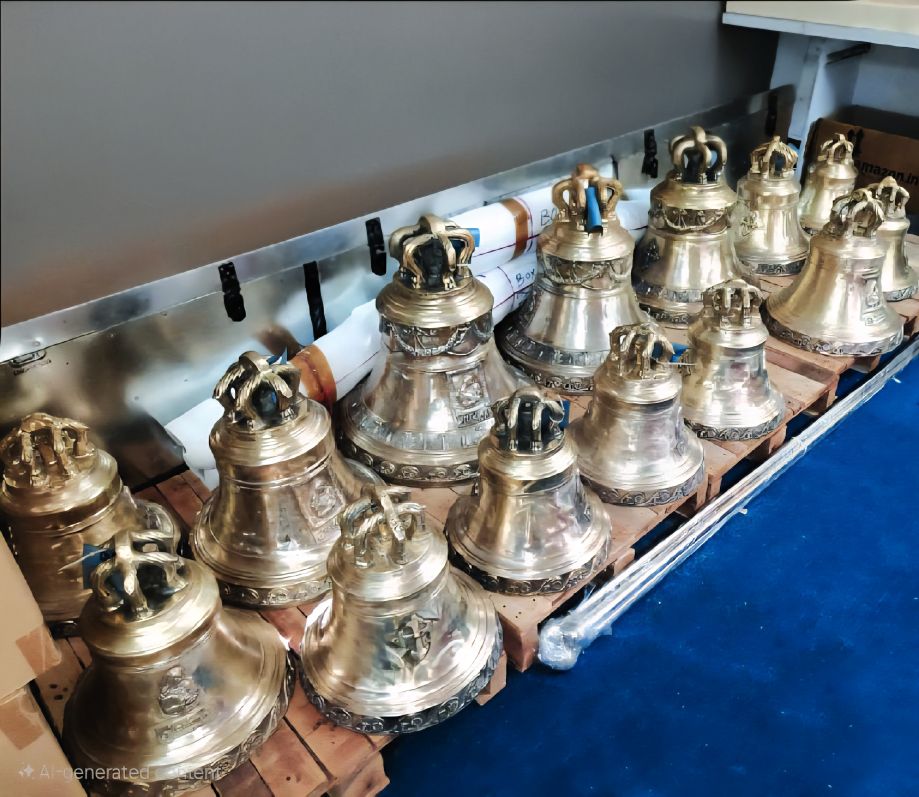
Choosing the best automatic church bell system requires a clear understanding of your church’s needs, infrastructure, and long-term goals. With the growth of church automation solutions and liturgical technology, modern systems offer far more than just bell ringing they provide precision, flexibility, and integration with digital worship tools.
The first and most important factor to consider is accuracy and scheduling capability. A reliable system should allow you to program daily, weekly, and seasonal schedules with exact timing. Advanced systems use real time clocks or astronomical synchronization to automatically adjust for liturgical events, ensuring consistent prayer times throughout the year. Systems with high accuracy eliminate human error and maintain discipline in worship routines.
Another key aspect is ease of operation and control. Modern automation systems are designed with user-friendly interfaces, allowing even non technical staff to manage schedules. Many advanced solutions now offer remote control via mobile or computer, enabling administrators to update timings or manage operations from anywhere. This level of control is especially useful for large churches or institutions with multiple services.
You should also evaluate the type of automation system based on your existing bell setup. Some systems use striker mechanisms to hit stationary bells, while others use motorized systems to swing the bell, preserving the traditional sound. Choosing the right type ensures compatibility and maintains the authenticity of the bell’s tone.
Integration with audio and prayer systems is another major advantage of modern solutions. Many systems now support pre-recorded prayers, hymns, and announcements, transforming a simple bell system into a complete digital prayer system. Similar to advanced school bell automation, these systems can play custom audio at scheduled times, improving communication and enhancing the worship experience.
Durability and safety should not be overlooked. Church bell systems often operate in challenging environments such as towers exposed to heat, rain, and electrical fluctuations. A good system should include weatherproof design, surge protection, and long operational life to ensure reliability with minimal maintenance.
Scalability is another important factor. As churches grow, their needs evolve. Choosing a system that supports expansion such as adding more bells, integrating lighting or clock systems, or connecting to IoT platforms ensures your investment remains future proof. Modern automation platforms can even manage multiple functions like bells, clocks, and lighting from a single system.
Finally, consider cost versus long term value. While automated systems may require an initial investment, they significantly reduce manpower needs and operational costs over time. They also improve efficiency, consistency, and overall management, making them a worthwhile investment for most churches.
The best church bell automation system is one that offers precision, ease of use, durability, and integration capabilities. Solutions like those from Madonna Pulsator provide advanced features such as astronomical clock synchronization, remote operation, and highly accurate scheduling, helping churches maintain tradition while embracing modern efficiency.