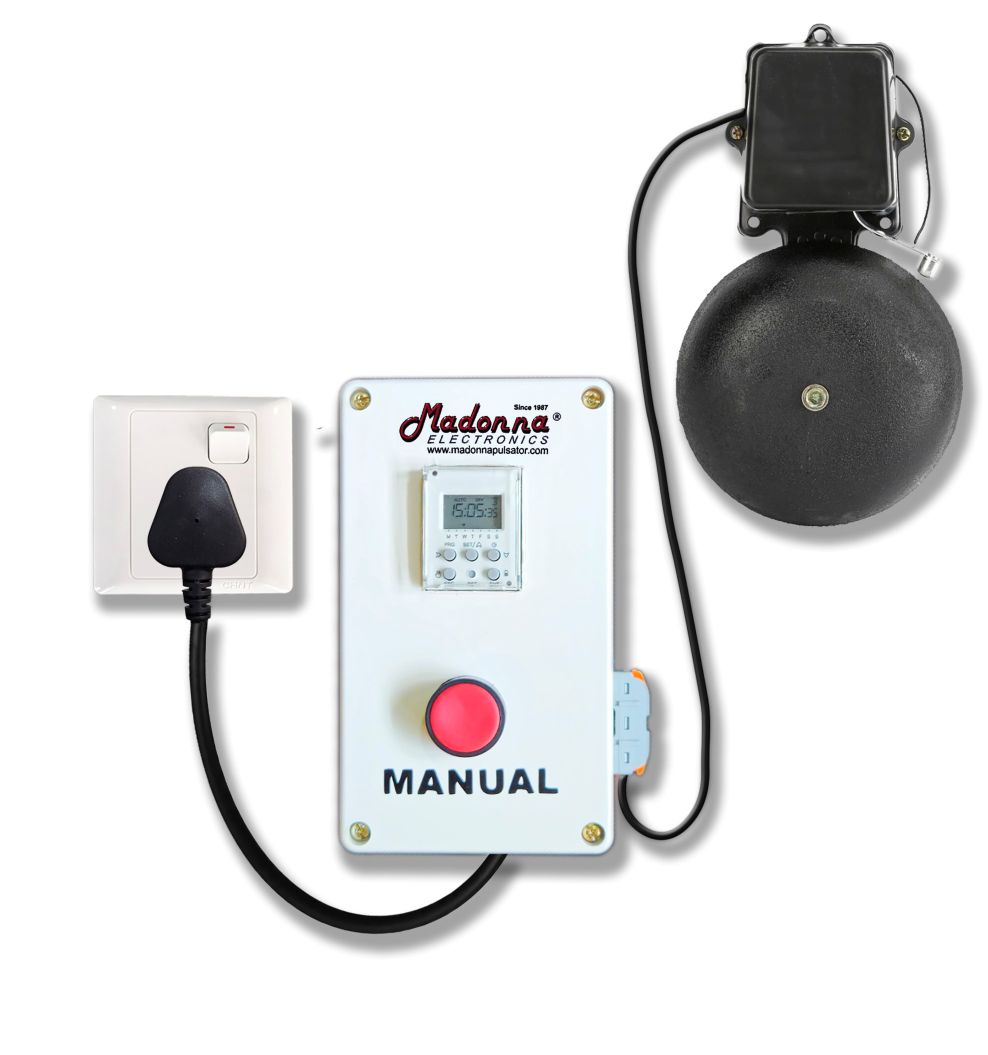
Automated bell systems are transforming how educational institutions and religious campuses manage time, communication, and daily routines. By replacing manual ringing with intelligent scheduling, these systems significantly enhance operational efficiency while ensuring consistency and discipline across the campus.
One of the most notable advantages of a school bell automation system is precise time management. Traditional manual bell ringing often leads to delays or inconsistencies, which can disrupt class schedules and reduce productivity. Automated systems eliminate this issue by following pre-programmed timetables, ensuring that every class starts and ends on time. This helps both students and staff stay aligned with the daily schedule, ultimately improving the overall learning environment.
Beyond schools, an automatic church bell system plays a crucial role in religious settings. Churches rely on bells to signal prayer times, services, and special events. Automation ensures that these signals are delivered accurately without requiring manual intervention. This is particularly beneficial for large campuses or institutions with multiple services throughout the day. It also preserves tradition while integrating modern efficiency through liturgical technology.
Another key benefit is reduced administrative workload. Staff members no longer need to monitor the clock or manually operate bells, allowing them to focus on more important tasks. With church automation solutions and school systems, administrators can easily update schedules, adjust timings for special events, and manage multiple bell patterns through a centralized interface. This flexibility is especially useful during exams, holidays, or unexpected schedule changes.
Consistency and discipline are also greatly improved. A reliable bell system reinforces structured routines, helping students develop better time management habits. In religious institutions, a digital prayer system ensures that prayer calls are delivered at the right moments, maintaining spiritual discipline and coordination among worshippers.
Modern automated bell systems are often integrated with advanced features such as remote access, mobile control, and cloud-based scheduling. This allows administrators to manage the system from anywhere, ensuring uninterrupted operation even in unforeseen circumstances. Some systems also include pre-recorded announcements or music, enhancing communication across the campus.
Energy efficiency and cost-effectiveness are additional advantages. Automated systems reduce the need for manual labor and minimize errors that could lead to wasted time or resources. Over time, this leads to significant operational savings while maintaining high reliability.
In conclusion, automated bell systems are an essential component of modern campus management. Whether it’s a school using school bell automation or a church adopting an automatic church bell system, these solutions streamline operations, enhance discipline, and reduce manual effort. By embracing church automation solutions and advanced liturgical technology, institutions can create a more organized, efficient, and responsive environment for both learning and worship.